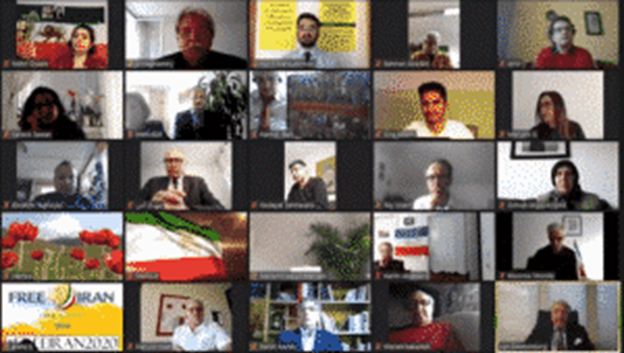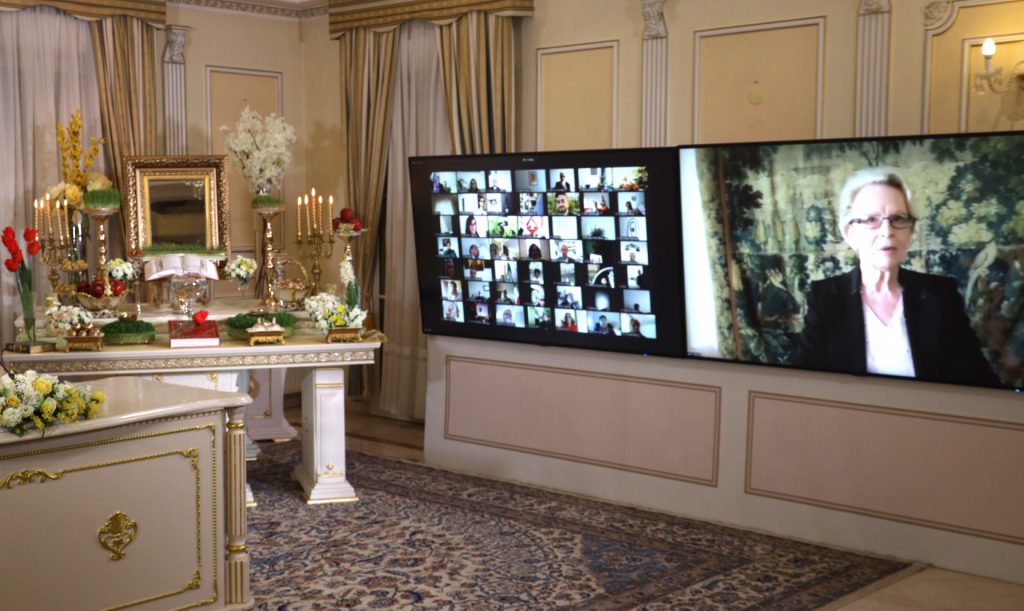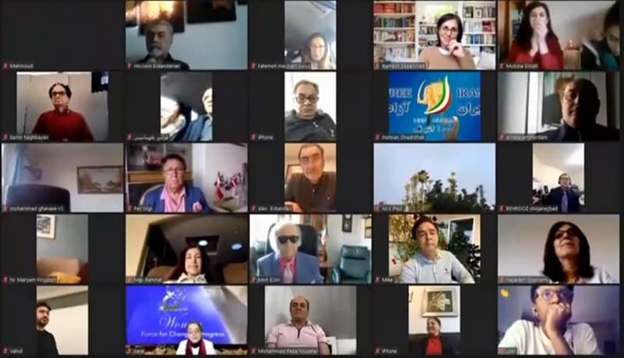
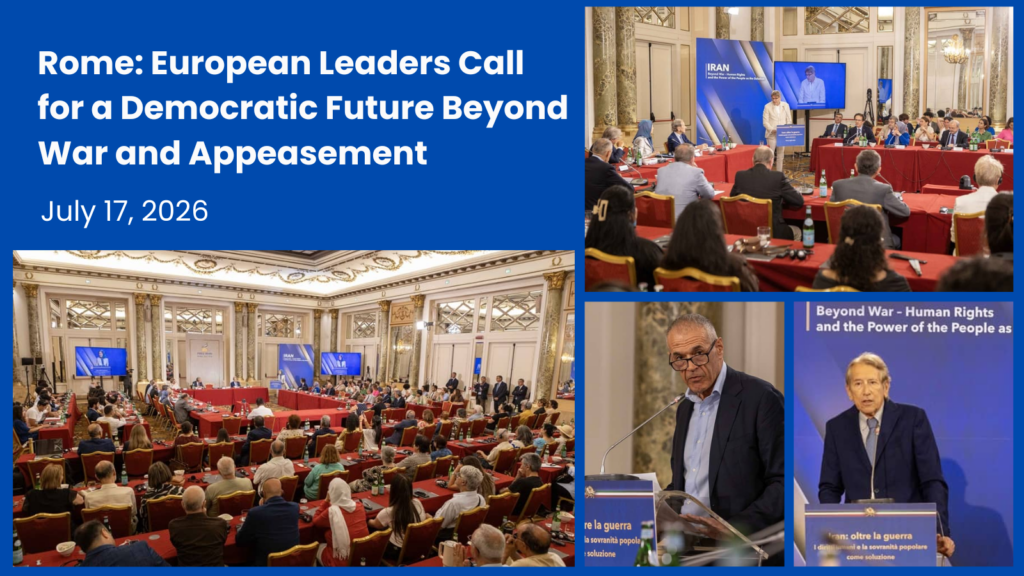
On July 17, 2026, Rome hosted the international conference “Iran Beyond War, Human Rights and the Power of the People as the Solution,” bringing together representatives of the Iranian community, European political figures, former government officials, diplomats, human-rights advocates and international experts to discuss the future of Iran.
The conference was organized with the participation of Iranian communities and organizations committed to supporting the Iranian people’s aspirations for freedom, democracy and human rights. The gathering focused on the need for a solution rooted in the Iranian people themselves and rejected both military intervention as a path to political change and policies of appeasement toward the clerical regime.
The discussions also highlighted the importance of an organized democratic alternative and the principles outlined in Mrs. Maryam Rajavi’s Ten-Point Plan, including free elections, separation of religion and state, gender equality, the rule of law and respect for fundamental rights.
Giulio Terzi: “It Is Time to Say Enough”
Senator Giulio Terzi, President of the Italian Senate’s EU Affairs Committee, addressed the international community’s response to the Iranian regime, including its repression, terrorism and the activities of the Islamic Revolutionary Guard Corps.
Speaking about the need for a clear international policy, Terzi concluded:
“Enough! It is time to say enough with the yeses, the buts and the obscuring of the truth.”
He also referred to the wave of freedom inside Iran and expressed his solidarity with the organized Iranian opposition.
Carlo Cottarelli: Iran’s Future Belongs to Its People
Professor Carlo Cottarelli, former IMF executive director and former Italian Prime Minister-designate, stressed that Iran’s political future cannot be imposed from outside. He pointed to the participation of women, students and workers in opposition to the ruling system and emphasized the principle of Iranian self-determination.
“The future of Iran will ultimately be determined, not by foreign powers, but by the Iranian people themselves.”
Cottarelli also referred to the principles contained in Mrs. Rajavi’s Ten-Point Plan, including free elections, separation of religion and state, judicial independence, gender equality and minority rights.
Guy Verhofstadt: Recognition of the Democratic Opposition
Former Belgian Prime Minister Guy Verhofstadt argued that Europe should move beyond the choice between military confrontation and accommodation of the Iranian regime. He called for greater engagement with the organized Iranian opposition and for stronger measures against the regime.
Referring to the Ten-Point Plan, he said:
“I think that the Ten-Point Plan of Mrs. Rajavi is a very good starting point for that constitution, for that recognition of the democratic opposition and the organized resistance.”
Verhofstadt further called for international recognition of the organized democratic opposition and a more active European policy toward Iran.
Sir Liam Fox: “Freedom Comes from the Ground Up”
Former UK Defence Secretary Sir Liam Fox stressed that political change in Iran must ultimately be achieved by the Iranian people rather than imposed from abroad. He rejected both the clerical dictatorship and the restoration of monarchy as alternatives to a democratic republic.
“Freedom does not fall from the skies. It never has. Freedom comes from the ground up. It always has.”
Sir Liam Fox also stated that only the Iranian people can establish a democratic republic free from both clerical and monarchical rule.
Paolo Gentiloni: “There Is a Way Beyond the War”
Former Italian Prime Minister Paolo Gentiloni addressed the consequences of conflict and the limitations of relying exclusively on diplomacy, sanctions or military action. He stressed the central role of the Iranian population and international support for their aspirations.
“The solution is, we could say, in your hands, in the hands of the Iranian people and on the support of the international community to the Iranian people.”
He concluded with a message emphasizing the democratic alternative:
“There is a way beyond the war. The way beyond the war is freedom and democracy.”
Maryam Rajavi: A Democratic Republic Is the Way Forward
NCRI President-elect Mrs. Maryam Rajavi addressed the long-running political and humanitarian crisis in Iran and the consequences of four decades of clerical rule. She emphasized that Iran’s future should not be determined by either the current theocracy or a return to the former monarchy.
“The solution lies neither in clinging to the present status quo by preserving this regime, nor in retreating to the past by reviving the deposed dictatorship of the Shah. The true solution lies in looking forward to the establishment of a democratic republic.”
Mrs. Rajavi also highlighted the role of organized resistance inside Iran and presented the Ten-Point Plan as a framework for a future republic based on the separation of religion and state, gender equality, democratic elections and respect for the rights of Iran’s diverse population.
Rita Bernardini: A Human Rights and Abolitionist Perspective
Rita Bernardini, former Italian MP and representative of Nessuno Tocchi Caino (Hands Off Cain), brought the issue of executions and the abolition of the death penalty to the center of the discussion.
Speaking about the democratic principles contained in the Ten-Point Plan, she said:
“Yes, they serve Iran to arrive at free elections, to arrive at democracy, to arrive at the rule of law.”
Bernardini emphasized that these principles are relevant not only to Iran but to democratic societies internationally, particularly at a time of growing geopolitical instability.
Joachim Rücker: Stopping Executions Must Be a Priority
Former President of the UN Human Rights Council Joachim Rücker emphasized the importance of using available international leverage to protect Iranian lives, particularly those facing execution.
“Stopping the executions, if you have a leverage, you might as well use it.”
Rücker also argued for a policy beyond war and appeasement, including international support for a credible and organized democratic opposition. He referred to the NCRI as an organized opposition that could be recognized and supported internationally.
Hans-Ulrich Seidt: Political Change Must Come from Iran
Former German Ambassador Hans-Ulrich Seidt examined Iran’s political, economic and military situation and stressed the limitations of foreign military campaigns in producing political transformation.
“We have to be realistic. Political change in Iran will not be brought about by the American and Israeli air campaigns.”
Ambassador Seidt also addressed attempts to promote Reza Pahlavi internationally, arguing that such efforts could become an obstacle to democratic forces inside Iran. He concluded by describing Mrs. Rajavi’s Ten-Point Plan as a realistic framework for Iran’s future and for free and fair elections.
A Message from Rome: The Iranian People at the Center
The Rome conference brought together Iranian community representatives and prominent European and international figures around a central question: how can Iran move toward a peaceful and democratic future?
Across their different areas of expertise, the speakers emphasized the importance of placing the Iranian people at the center of the search for a solution. The discussions addressed human rights, executions, political repression, terrorism, the limitations of military intervention and diplomacy, and the need for a credible democratic alternative.
For the Iranian communities participating in and supporting the conference, the event also represented an opportunity to bring the voices and aspirations of Iranians abroad into the European political debate. Their message was that Iran’s future must ultimately be determined by its people and that the international community should stand with their demand for freedom, democracy, human rights and an end to dictatorship.
The conference therefore underscored a message shared by the Iranian community and the international guests in Rome: Iran needs a future beyond both war and appeasement—a future in which the Iranian people can determine their own political destiny.