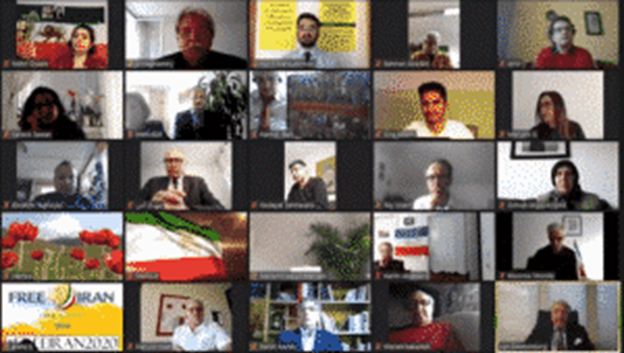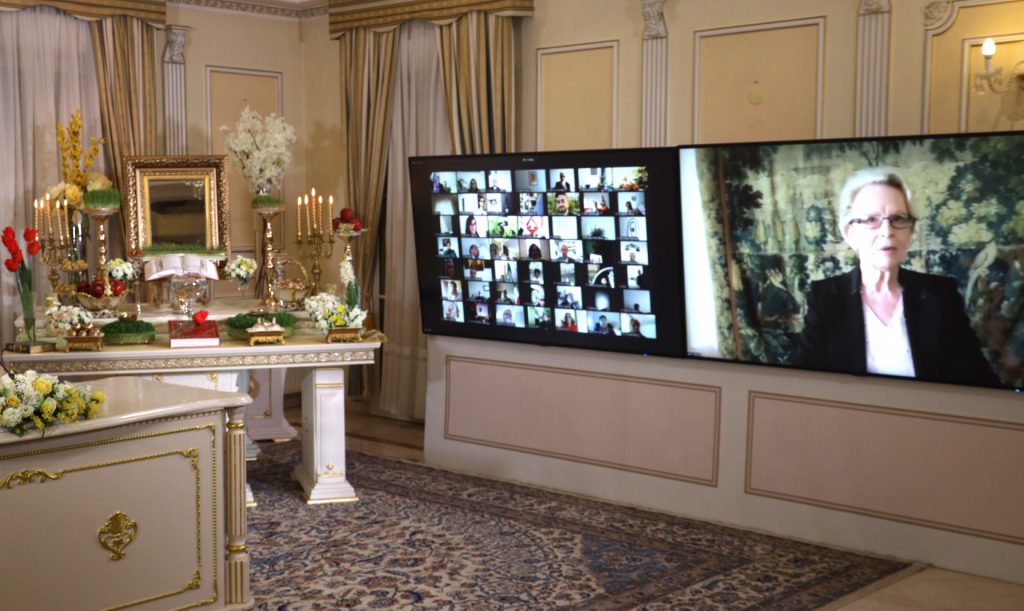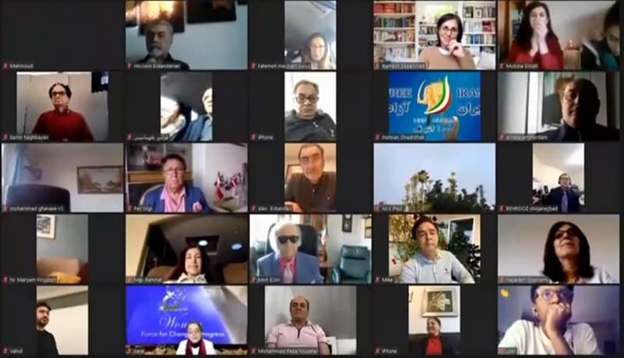
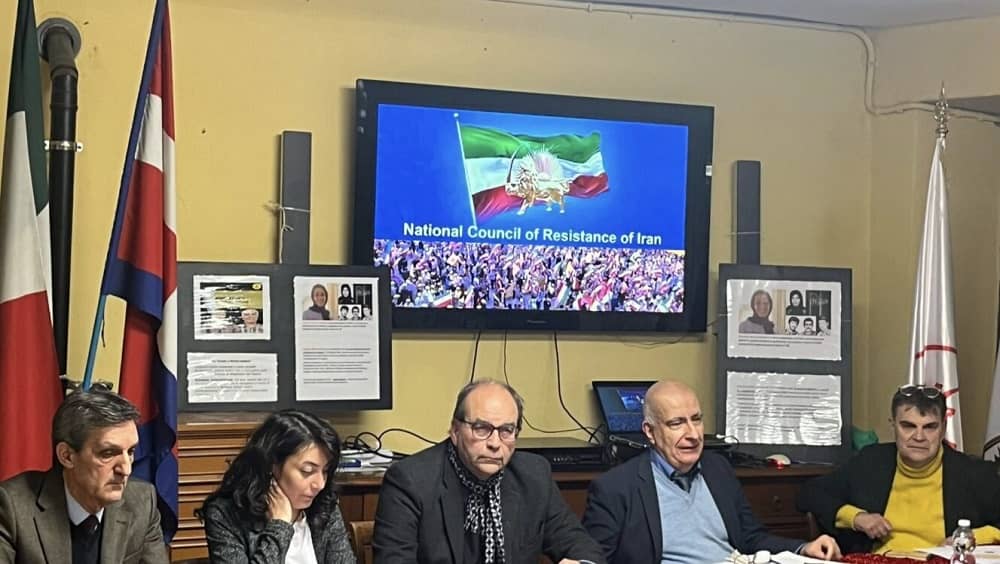
A human rights forum held in the middle of March, in Rivoli, Italy, spotlighted the growing number of executions and worsening repression in Iran. The event, organized by the Meridiana Human Rights Association and the Free and Democratic Iran Association, brought together academics, activists, and members of the Iranian diaspora to urge stronger global support for Iran’s organized opposition movement and a decisive stance against the ruling regime.
Bruno Merlin, president of the Meridiana Association, opened the event by contrasting Iran’s rich cultural legacy with the oppressive nature of its clerical rulers. He described the regime as a religious dictatorship that stifles progress and democracy, and emphasized the significance of the Iranian people’s aspirations for change, which he said are embodied in the resistance movement.
Professor Valter Coralluzzo from the University of Turin analyzed the ideological rigidity of the regime, noting its incompatibility with peace and stability. He warned that as the regime faces growing isolation and failures in the region, it has ramped up executions—particularly of political prisoners—as a tactic to instill fear and crush dissent. Coralluzzo highlighted that recent uprisings show a clear rejection of both religious and monarchical rule, and a desire for a democratic, secular government. He presented the National Council of Resistance of Iran (NCRI), led by Maryam Rajavi, as a viable democratic alternative, citing her Ten-Point Plan advocating for secular governance, gender equality, and civil liberties.
Yalda Jahandarpour, speaking on behalf of the Iranian Youth Association in Italy, highlighted the long-standing struggle for freedom in Iran, especially among women. She praised the active involvement of youth and women in recent protests, supported by underground resistance groups, and called for the fall of the regime and the establishment of a democratic republic. Jahandarpour said that executions have become a central tool of repression aimed at silencing political opposition and deterring further protests. She urged international governments to stand firmly with the Iranian people.
Dr. Yousef Lesani warned of the regime’s increasing reliance on oppression, economic exploitation, and executions in response to its political and strategic setbacks. He condemned the regime’s theft of national wealth and its involvement in regional terrorism, calling these deliberate strategies to maintain control. Dr. Lesani reiterated the credibility of the NCRI as a democratic alternative. He called on Western nations to end policies of appeasement, formally recognize the Iranian resistance, and label the Islamic Revolutionary Guard Corps (IRGC) as a terrorist organization.
Luca Andreani, head of Amnesty International’s Piedmont branch, closed the conference by highlighting the dramatic increase in executions, particularly targeting ethnic and religious minorities. He denounced the regime’s consistent violations of international human rights standards, including hostage-taking and abuse of the death penalty. Andreani also underscored the dire situation faced by Iranian women under systemic discrimination and violence. Despite the regime’s brutality, he expressed optimism for change and called for ongoing international attention and concrete action.
The conference concluded with a united call for the global community to abandon failed policies of appeasement, support the Iranian people’s demand for democratic change. Participants demanded tangible measures to stop executions and hold the regime accountable for its widespread human rights abuses.