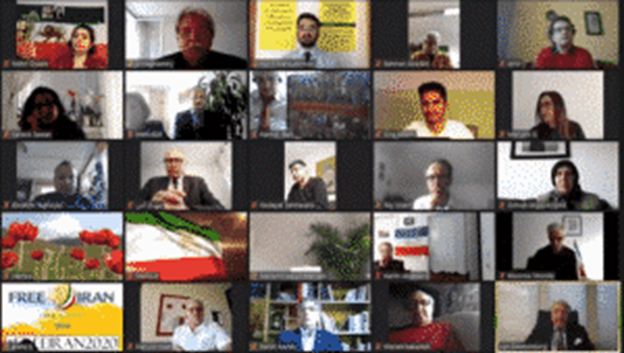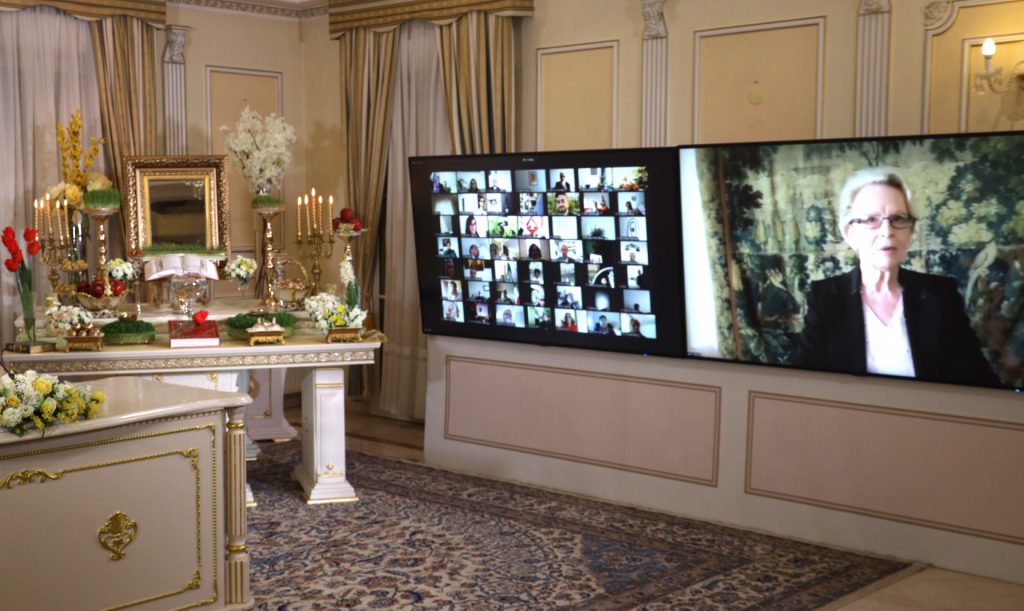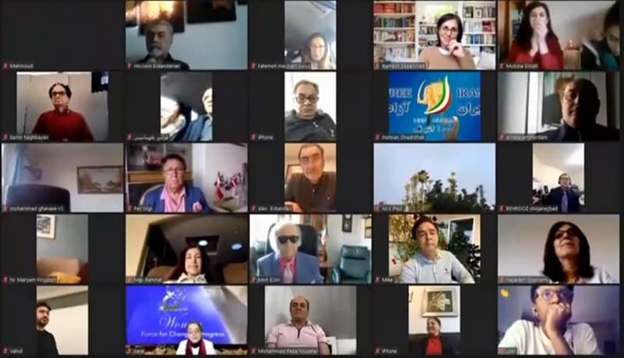
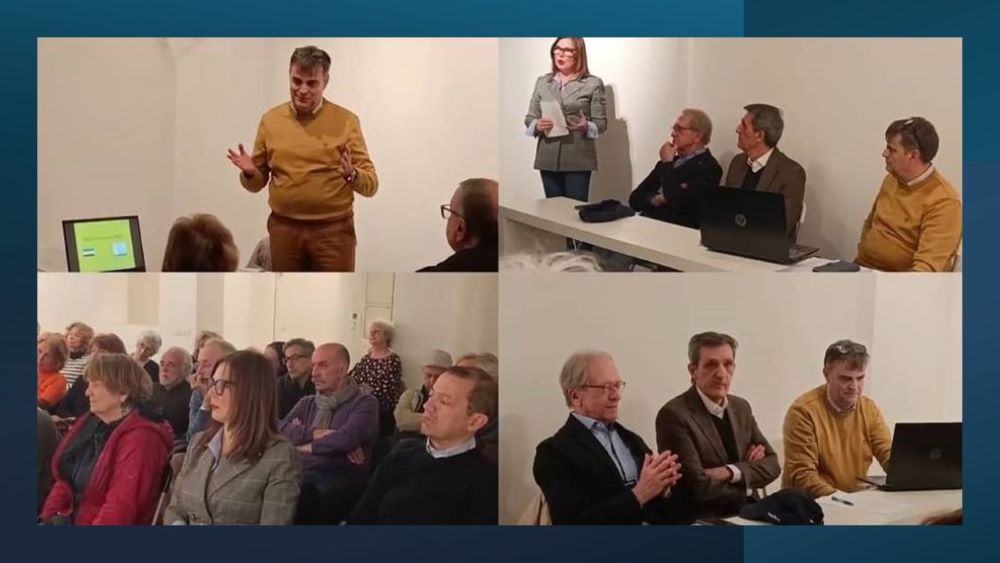
May 3, 2025 – Turin, Italy: A recent civil society gathering brought together Iranian community activists, labor representatives, and European human rights defenders to condemn the sharp rise in executions in Iran and to call for meaningful international support for the Iranian people’s aspirations for freedom and democracy.
The event which was organized by the Association for a Free and Democratic Iran in partnership with the National Association of Italian Partisans and Italy’s CGIL trade union, served as a platform to highlight the urgency of the human rights crisis in Iran. It also reflected a growing wave of solidarity from European institutions and grassroots movements.
Speakers drew attention to Iran’s staggering execution rate, estimated to constitute roughly 75% of all known executions worldwide in the past year. Participants called on democratic governments and international bodies to move beyond statements of concern and adopt concrete measures to hold the regime accountable.
At the heart of the discussion was a call to recognize and support democratic alternatives to Iran’s theocracy. Several speakers voiced strong support for the National Council of Resistance of Iran (NCRI) and its President-elect, Maryam Rajavi, whose democratic platform has gained growing attention among exiled communities and rights advocates alike.
But the focus extended beyond politics. Many participants emphasized the broader movement for justice and freedom inside Iran—a movement led by ordinary citizens, especially women and youth, who continue to risk their lives by standing up to repression. Activist Gianni Sartorio spoke of the decades-long resilience of the Iranian Resistance, both inside the country and in the diaspora. He described recent protests as a sign that the Iranian people are no longer willing to tolerate the status quo.
Local official Laura Pompeo expressed support for a regional initiative aimed at passing a resolution against the death penalty in Iran. She emphasized the importance of amplifying the voices of Iranian women and young people, calling them the “heartbeat of change.”
Representing Amnesty International, regional coordinator Luca Andriani condemned the systemic nature of the Iranian regime’s abuses, including religious persecution, gender-based violence, and the arbitrary detention of dual nationals. He reiterated that these are not isolated incidents but symptoms of a regime that cannot be reformed.
Echoing the sentiment of urgency, Iranian physician and researcher Dr. Yousef Lesani warned that the regime’s reliance on executions is a calculated effort to crush dissent. He underscored the rise of organized, grassroots resistance efforts within Iran and advocated for greater recognition of these efforts by the international community.
Dr. Lesani also endorsed the NCRI’s Ten-Point Plan for a democratic Iran, describing it as a practical framework for the country’s future. He urged European governments to take decisive action—beginning with the designation of the Islamic Revolutionary Guard Corps (IRGC) as a terrorist entity and the recognition of the Iranian people’s right to resist oppression.
The Turin conference is part of a growing series of European events highlighting the demand for a democratic transition in Iran. Organizers committed to expanding their outreach to Italian institutions and building cross-party parliamentary support for stronger policies toward Tehran.
The event closed with a unified call to stand with the Iranian people in their struggle for dignity, justice, and democratic freedoms. Participants reaffirmed that solidarity must go hand-in-hand with political action, and that the time has come for Europe to side clearly with the forces of change in Iran.