


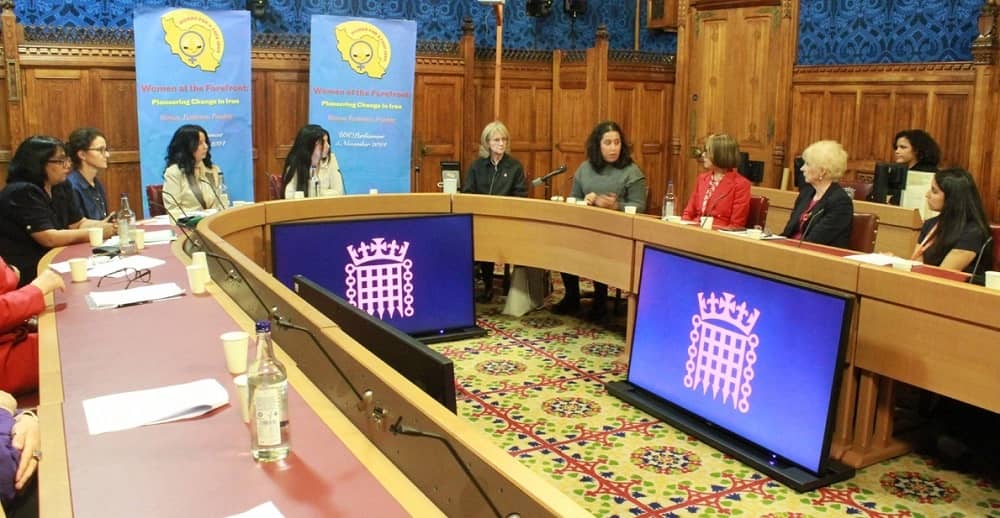
On November 5, members of the UK House of Lords gathered in Parliament with Women for a Free Iran to express solidarity with the women-led movement in Iran advocating for human rights and freedom. The event, themed “Women, Resistance, Freedom,” brought together British lawmakers and Iranian activists to spotlight the resilience of Iranian women confronting oppressive laws and human rights violations.
Rosa Zarei, the host and daughter of a former political prisoner, inaugurated the meeting by emphasizing the urgent need to address the oppression of Iranian women. She stated, “Iranian women and girls have courageously taken the lead in the fight for dignity, equality, and justice, braving immense risks to demand the fundamental rights many of us consider basic.” She underscored that their slogan, “Women, Resistance, Freedom,” embodies universal principles, as their struggle goes beyond personal liberties to encompass the fundamental human rights of safety, dignity, and autonomy.
Baroness Beverley Hughes of Stretford, a Labour member of the House of Lords and a champion for women’s rights, delivered an impassioned speech about the strength of Iranian women leading this movement. “Their battles, though different from ours, remind us of the profound courage required to challenge tyranny,” she said. She praised their bravery in confronting a repressive regime and urged international support, describing their resistance as pivotal for broader systemic change in Iran.
Baroness Meyer shared her personal connection to the cause, drawing parallels with her family’s history of persecution. “The fight for women’s freedom is deeply personal to me,” she said. Reflecting on her visit to Iran, she described the oppressive conditions women endure and reaffirmed her commitment to supporting their fight against dictatorship.
Outrage at the ongoing wave of executions
Baroness Redfern expressed outrage at the ongoing wave of executions in Iran, including the recent deaths of over 250 individuals since July and the execution of several women in October. She called for an end to the regime’s Islamic revolutionary courts and Sharia law, advocating for fundamental freedoms such as freedom of expression and personal choice. Addressing Iranian women, she urged them to “never lose hope” and assured them of international solidarity.
Baroness Verma stressed the necessity of global parliamentary backing for Iranian women’s rights. Highlighting her bond with NCRI President-elect Mrs. Maryam Rajavi, she said, “I stand firmly with the women of Iran who have fearlessly fought for their lives and freedoms.” She called on lawmakers worldwide to amplify these voices, cautioning, “When good people remain silent, evil triumphs.”
Dr. Elaheh Zabihi, president of Women for a Free Iran, provided an in-depth account of the resistance led by Iranian women, particularly during the 2022 uprisings. She recounted the story of Maryam Akbari Monfared, a political prisoner detained for 15 years for seeking justice for her siblings executed in the 1980s. Dr. Zabihi urged international governments to designate the Islamic Revolutionary Guard Corps (IRGC) as a terrorist organization and to cut diplomatic ties with Tehran until all political prisoners are freed. “Without decisive global intervention,” she warned, “the cycle of violence and repression will persist.”
Former political prisoner Monir Hosseini shared her harrowing experience of surviving torture under the regime. She praised the courage of current prisoners participating in the “No to Execution” campaign, where detainees have been on hunger strikes for over 40 weeks, advocating for an end to executions. Hosseini called for international recognition of the NCRI as a credible alternative to the regime.
Crisis in Iran’s education system
Tahereh Safdari shed light on the crisis in Iran’s education system, where deliberate chemical attacks on schools aim to suppress dissent. She described the impact on students and teachers, who face arrests, torture, and intimidation, yet continue to demand fair treatment and safe schools. Safdari called for global action to hold Iran’s leadership accountable.
Dr. Yana Solikova presented evidence of systemic human rights abuses, referencing findings from the International Fact-Finding Mission. She described arbitrary arrests, torture, and the targeting of protesters and their families, including the abuse and deaths of children. Dr. Solikova advocated for international legal mechanisms to hold Iranian officials accountable and stressed the need for firm action against policies of appeasement.
In an emotional address, Dr. Shida Oraki recounted the personal losses her family endured under the regime, including the torture and death of her sister-in-law and the imprisonment of her 12-year-old niece. Despite these tragedies, she expressed hope for freedom in Iran, envisioning a day of celebration in Azadi Square.
Rana Rahmanfard concluded the event by tracing the history of Iranian women’s fight for rights, from the 1909 Constitutional Revolution to the present. She highlighted the leadership of Mrs. Maryam Rajavi and her Ten-Point Plan for a democratic Iran, calling on the international community to help dismantle the current regime and support a vision of equality, peace, and freedom.